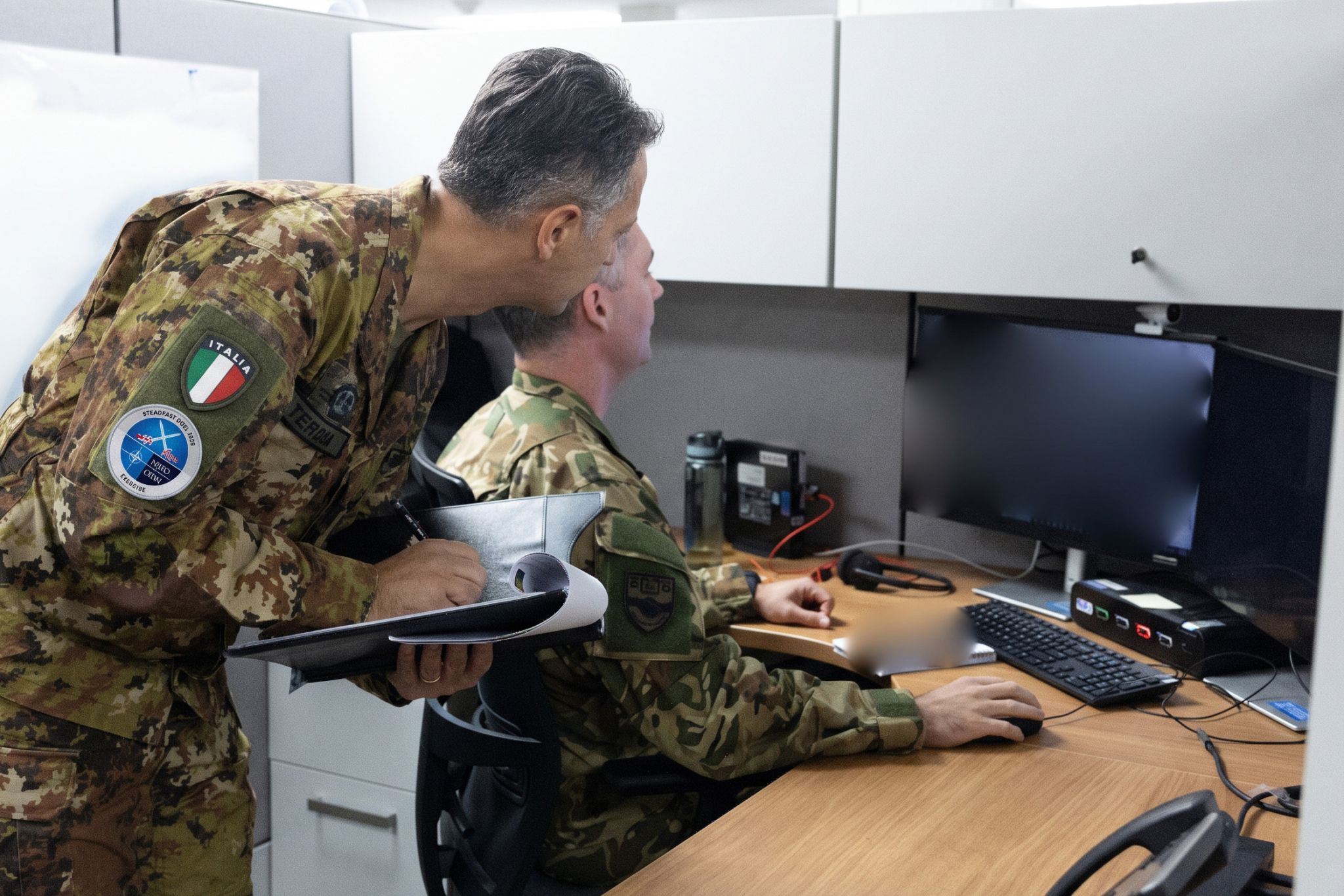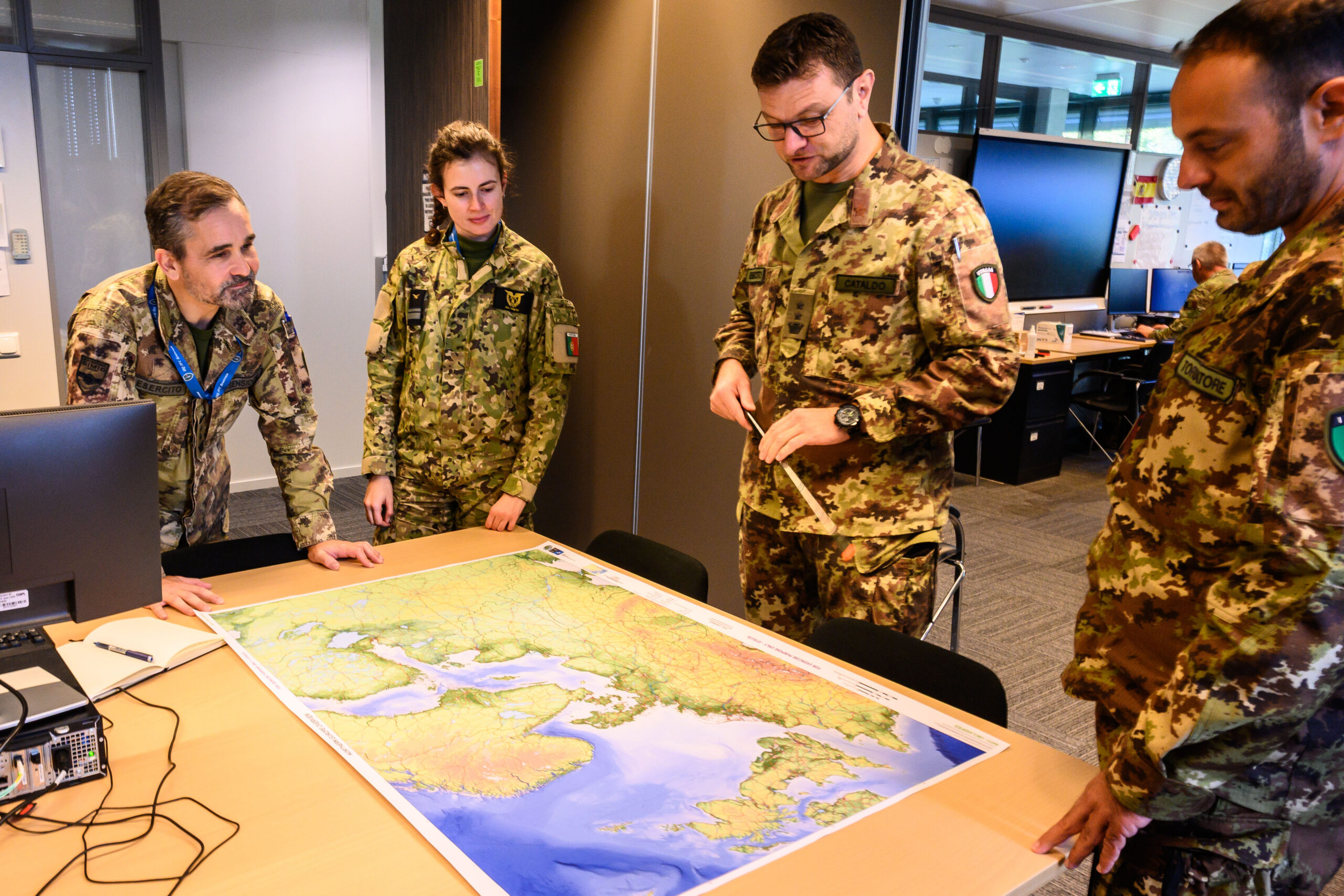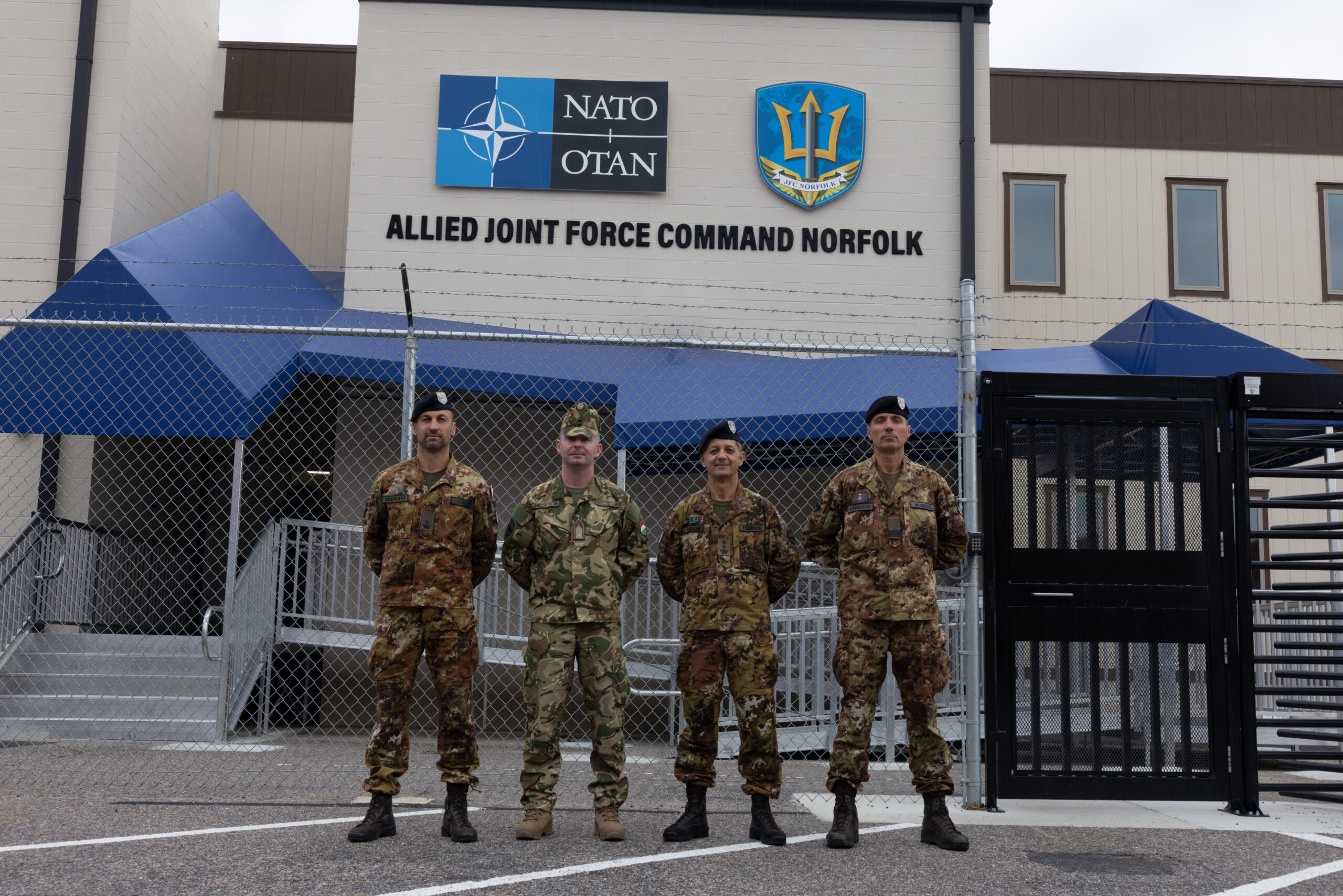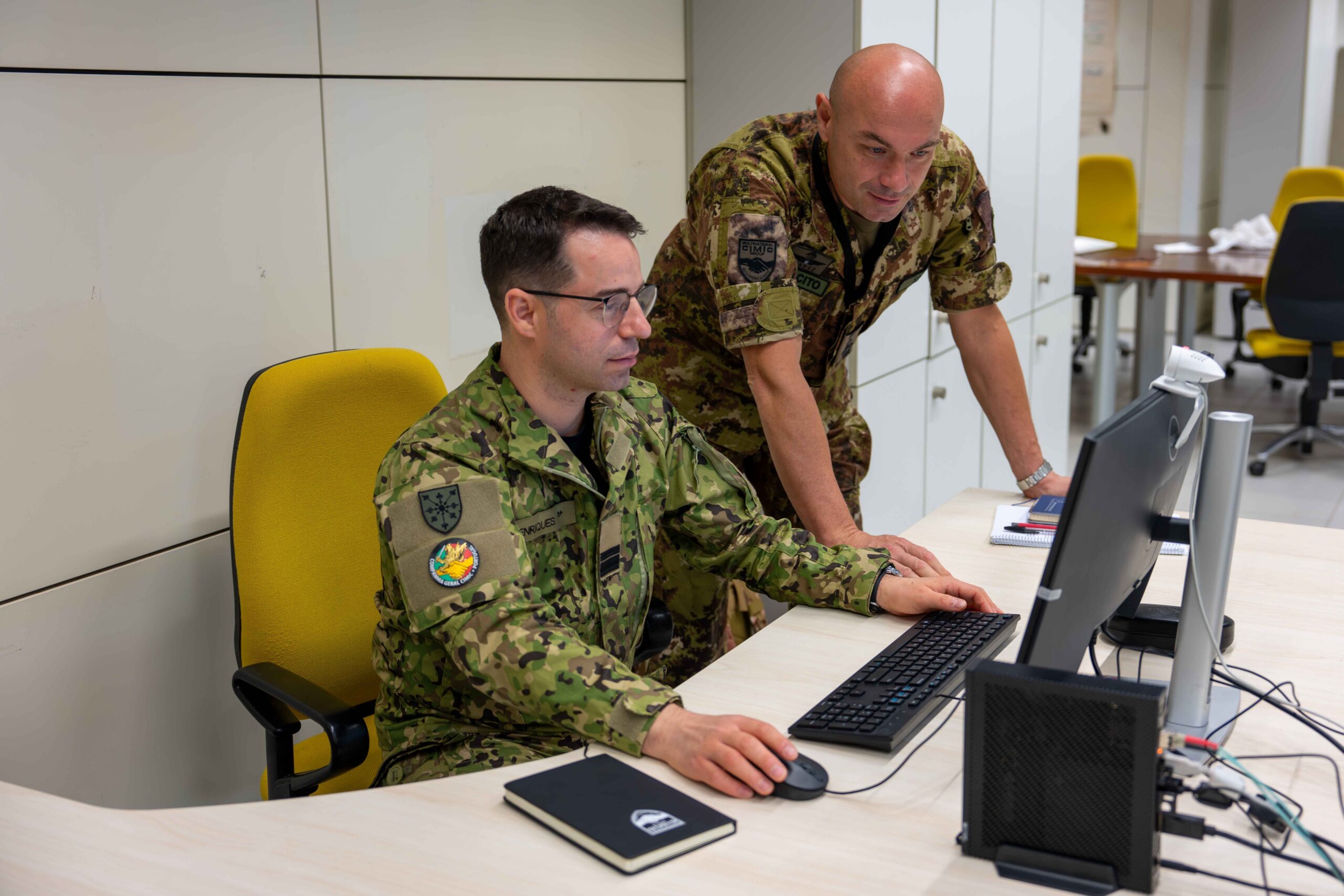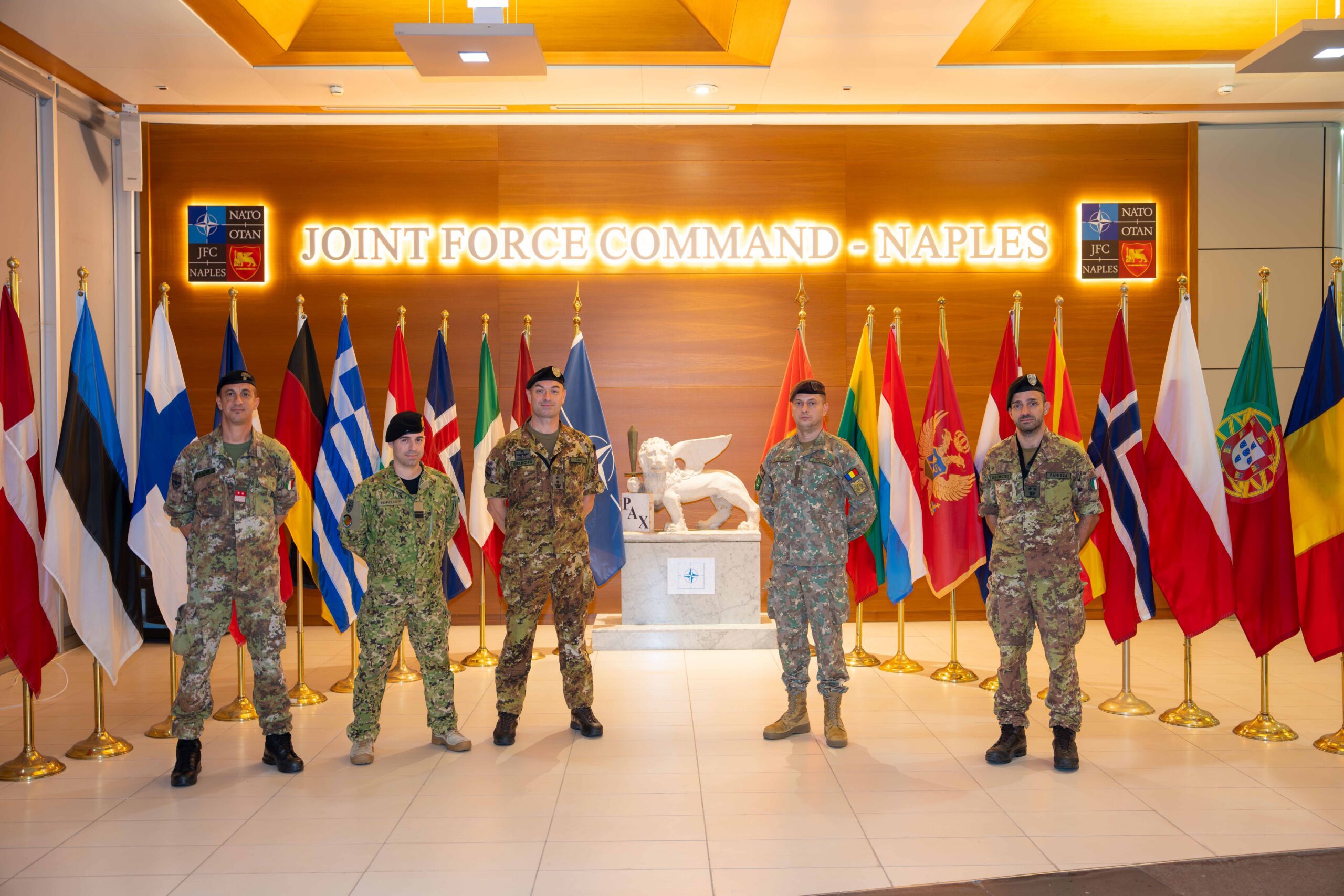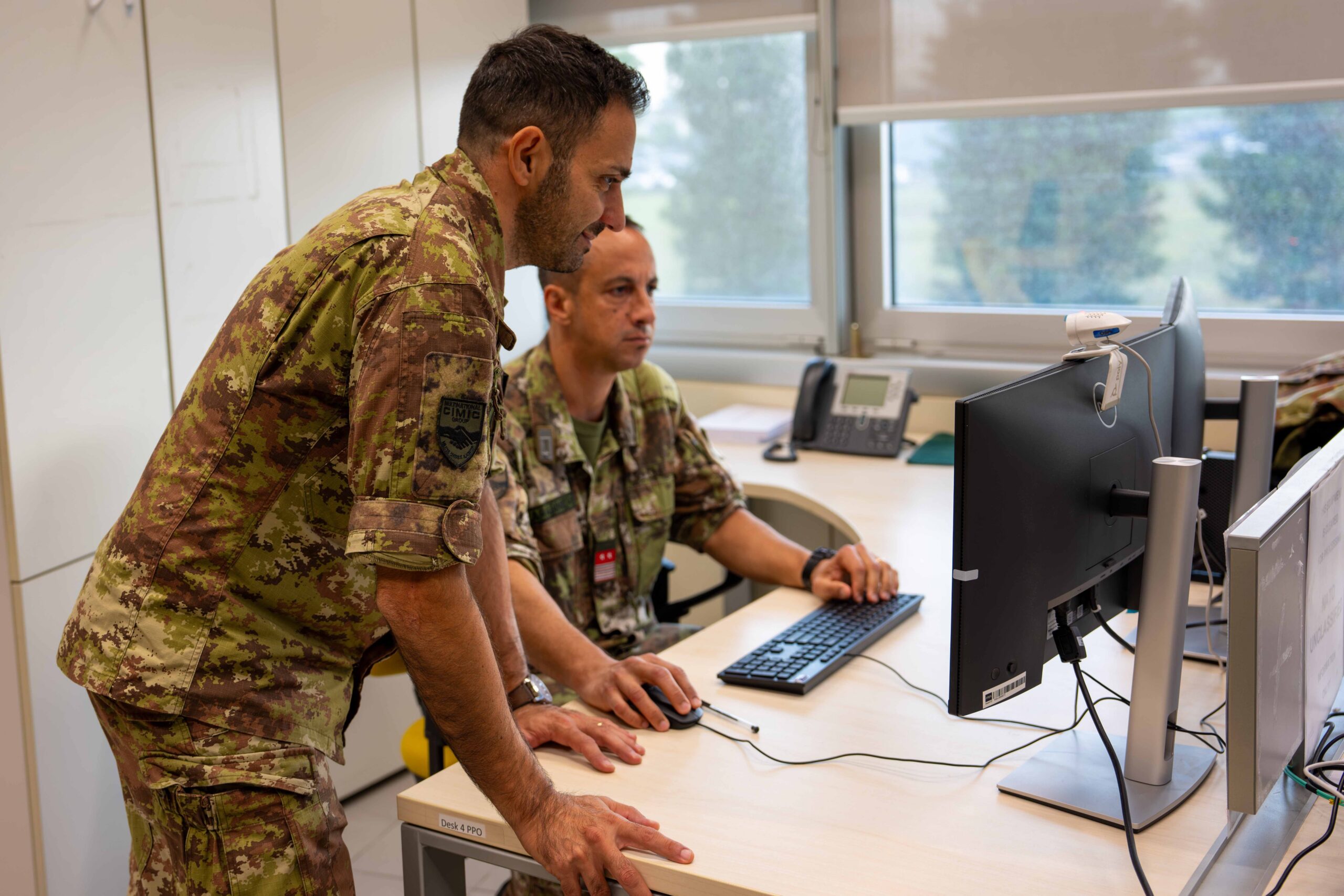






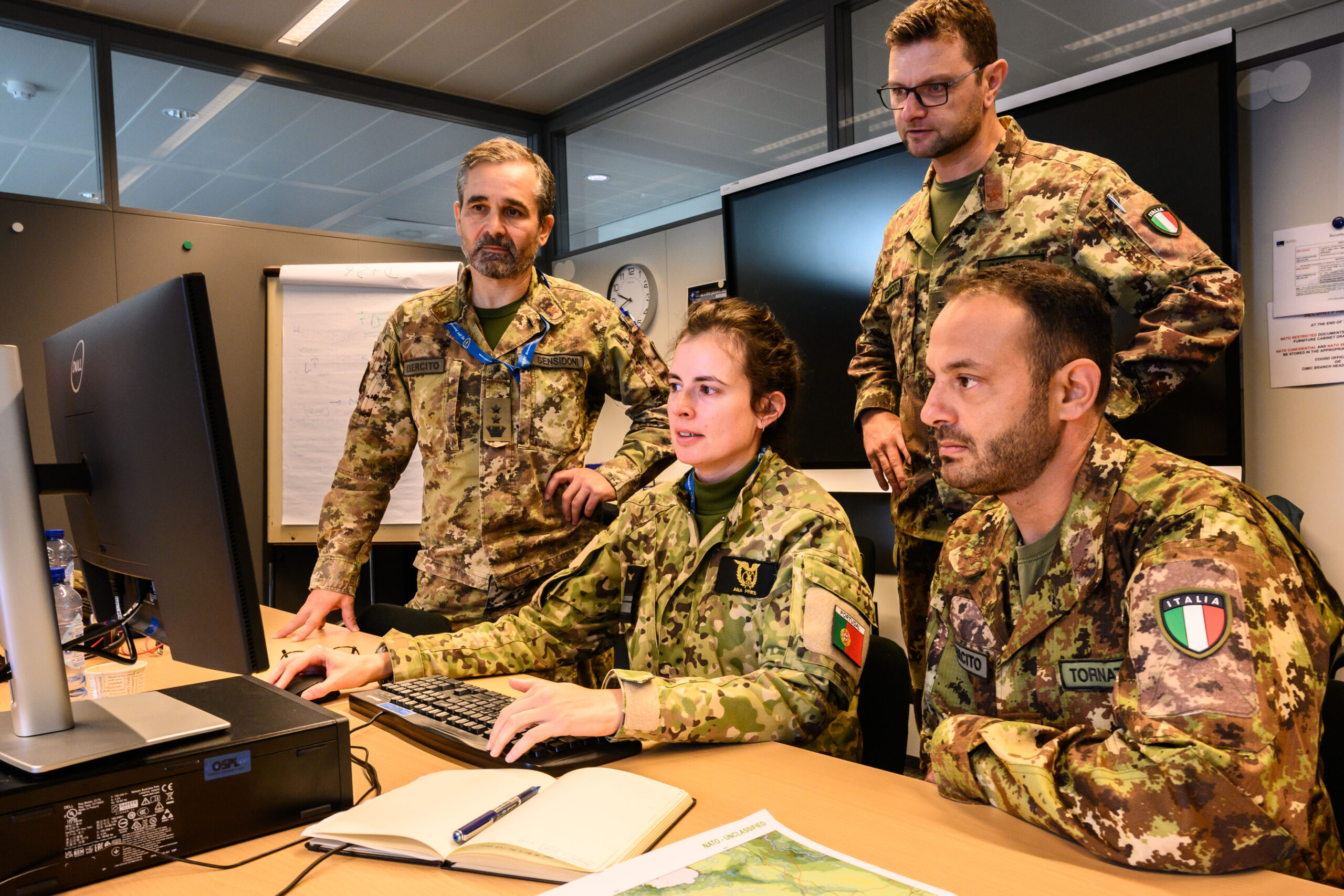
Three CIMIC Staff Elements at NATO’s Joint Force Commands in Brunssum, Naples and Norfolk, supporting multinational operational planning.
An unavailable port, a disrupted power network or a congested transport route can affect the movement and sustainment of military forces. For commanders, timely awareness of these challenges enables them to assess risks, consider alternatives and make informed decisions.
Against this backdrop, the Multinational CIMIC Group (MNCG) contributed to STEADFAST DUEL 2026, one of NATO’s major collective-defence exercises. Three multinational CIMIC Staff Elements operated at NATO’s Joint Force Commands in Brunssum, Naples and Norfolk, with one team at each headquarters.
Operating within continuous, interconnected multi-domain exercise scenarios, MNCG personnel worked alongside other staff branches to practise integrating CIMIC expertise into operational planning. In this environment, civil information must be relevant and timely to inform commanders’ assessments.
One exercise scenario, involving a reduction in key capacity of a Host Nation, may highlight the importance of coordination between CIMIC personnel and civilian authorities in order to evaluate possible alternative arrangements.
STEADFAST DUEL 2026 provided MNCG personnel with an opportunity to test and further develop their CIMIC expertise within NATO’s operational headquarters.
The operational value of understanding the civil environment lies in identifying, early enough, the factors that may influence military decisions before available options become limited.